
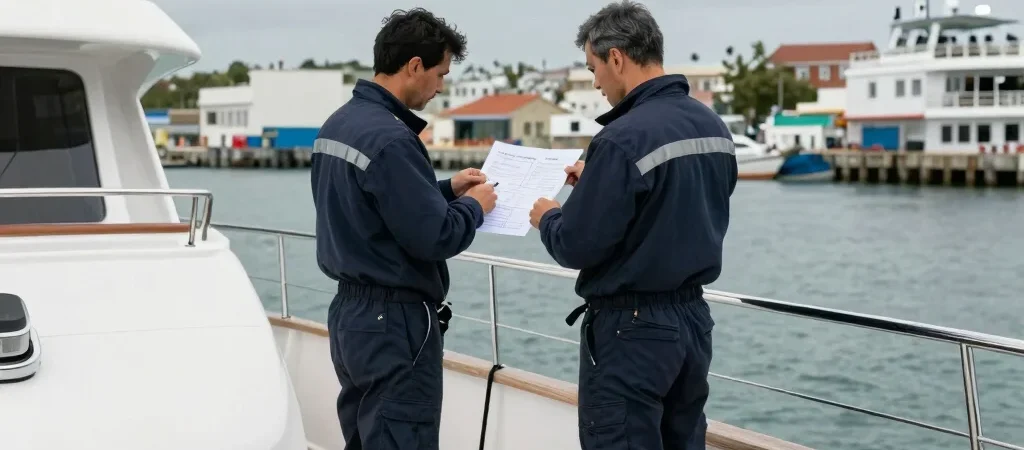
Before a yacht leaves a harbor, the deck may look almost still: lines are coiled, hatches are shut, and the crew moves through familiar checks. That quiet is work. A safe passage depends not only on navigation decisions, but on people knowing their roles, sharing relevant information, and noticing when the plan needs to change.
Make the briefing practical
A useful crew briefing connects the intended passage with the people doing the work. It can cover the plan, expected conditions, watch arrangements, communication methods, and who to contact if something changes. The exact content should reflect the vessel and its procedures; a briefing is not a substitute for the captain’s judgment or official navigational information.
New crew should be able to ask where safety equipment is kept and how to raise a concern without guessing. Shared language matters, particularly when people have different levels of experience or do not normally work together. A short, direct check-in can reveal a misunderstanding before it becomes a problem.
Treat routine checks seriously
A deck walk-through may include checking that working areas are clear, loose gear is secured, and access points are usable. Below deck, the crew may confirm that essential items are stowed and that everyone understands the vessel’s familiarization procedures. These are examples, not a universal checklist: follow the vessel’s documented procedures and the responsible officer’s instructions.
Good handovers are just as important as checks. Passing on a changed condition, an unfinished task, or a piece of equipment that needs attention keeps the next watch from starting with missing context. Specific notes beat vague reassurance; say what was observed, when, and what action remains.
Communication is part of seamanship
Conditions can shift, plans can be revised, and fatigue can make small omissions more likely. Crew members help by reporting concerns early and repeating back important instructions when clarity matters. That does not replace formal training, vessel procedures, or official safety guidance; it helps the crew use them consistently.
For anyone joining a yacht, learn the onboard routines before assuming you know them from another boat. Ask who is responsible, where the current procedures are kept, and how updates are communicated. The most reassuring passage is rarely the one with no work to do; it is the one where the work is understood and shared.